
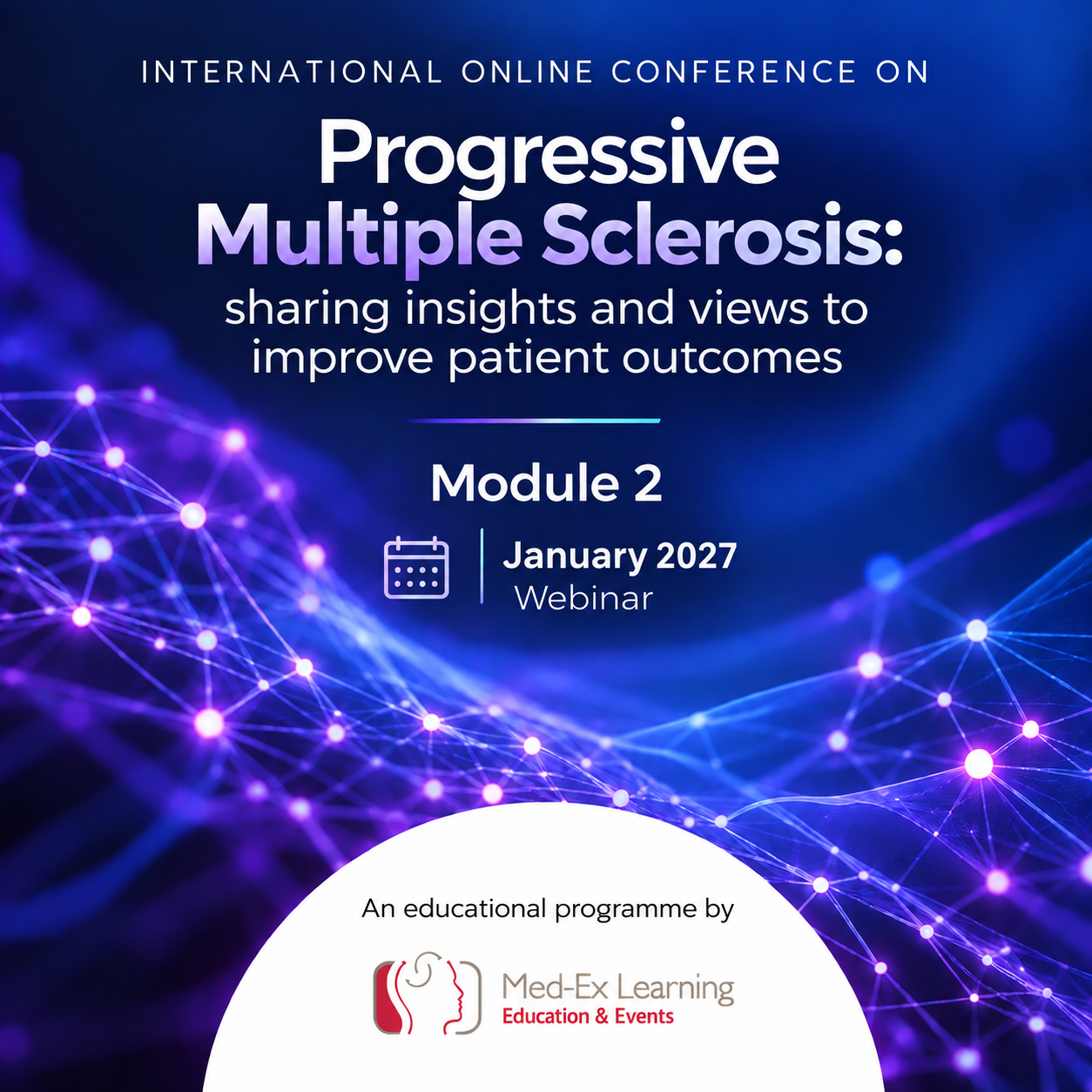
Description
Aim
Multiple Sclerosis (MS) is a chronic neuroinflammatory disease that primarily affects young adults, leading to neurological impairment and disability. Traditionally, MS has been categorized into forms such as relapsing-remitting MS (RRMS), primary progressive MS (PPMS), and secondary progressive MS (SPMS). However, it is now acknowledged that the disease should be viewed as a continuum, as inflammation and neurodegeneration coexist from the early phases of the disease.
Disease worsening can be triggered by both acute and chronic inflammatory processes, or it may occur independently of inflammation. Consequently, new concepts have recently emerged, such as smoldering-associated worsening (SAW) and progression independent of relapse activity (PIRA).
New biomarkers have been identified to assess smoldering inflammation, including paramagnetic rim lesions (PRLs) and slowly expanding lesions (SELs) visible on MRI. Additionally, fluid biomarkers are under evaluation for their potential to monitor disease evolution and predict progression in advance.
In recent years, a global effort by researchers has focused on defining the immunopathology, clinical and radiological metrics, and biomarkers specific to progressive MS. Central to this effort is a deeper understanding of the immune pathways that sustain compartmentalized, smoldering inflammation Among these, the CD40/CD40L costimulatory pathway has emerged as a pivotal regulator of both adaptive immunity (T- and B-cell activation) and innate immunity (macrophage, dendritic cell, and microglial activation), positioning it as a key driver of both acute and chronic, compartmentalized inflammatory processes of which the latter is implicated in smoldering disease and PIRA.
The goal is to identify, as early as possible, individuals at higher risk of disability accumulation driven by compartmentalized smoldering neuroinflammation, and evaluate the effectiveness of new treatment strategies—including CD40/CD40L pathway inhibitors (e.g., anti-CD40L antibodies), which has the potential to regulate both adaptive and innate immune activation in the periphery as well as the interfaces with the CNS such as the leptomeninges without lymphocyte depletion, and BTK inhibitors, which can cross the blood-brain barrier and directly target CNS-resident innate immunity
Learning Objectives
The International Conference aims to achieve the following learning objectives:
- Identify immunopathological hallmarks of progression in MS
- Quantify severity and establish prognosis based on innovative prognostic markers
- Describe new immunological targets of treatments considering the immune players involved in MS
- Detect early symptoms and signs of progression by using conventional and digital assessments
- Discuss the results of clinical trials exploring the efficacy of new treatments, such as BTKis inhibitors, targeting compartmentalized inflammation in MS
Target audience
The International Conference is dedicated to a at a global audience of HCPs biologists with a special interest or focus on MS:
- neurologists
- nurses
- physiotherapists
- pharmacologists
CME Compliance and Accreditation
Med-Ex Learning is an EACCME provider and acts in full compliance with the international rules of medical education. 100% of our activities, whether CME accredited or not, are perfectly in line with the requirements of international medical education.
Registration
info@medexlearning.com
Scientific Topics
- Pathological Hallmarks of CNS Chronic Inflammation and Neurodegeneration: From Border Tissues to Spinal Cord Damage
- Fluid Biomarkers in Multiple Sclerosis: Current Landscape and Future Directions for Disease Monitoring and Therapeutic Stratification
- Progression in Multiple Sclerosis from an Imaging Perspective: Recent Advances and Emerging Insights
- Chronic Active Lesions (CALs): Detection Methods, Pathological Validation, and Determinants of Lesion Evolution
- Integrating Multimodal Biomarkers to Predict Disease Progression: The Role of Artificial Intelligence