
Description
Aim of the Workshop
Myasthenia gravis (MG) is a prototypical neurological autoimmune disorder affecting the neuromuscular junction. Its hallmark clinical feature is fluctuating muscle weakness caused by pathogenic antibodies targeting the nicotinic Acetylcholine Receptor or the Muscle-specific kinase expressed on the post-synaptic membrane.
MG has long served as a model for autoimmune neurological diseases, offering critical insights into the antibody-mediated pathogenic mechanisms and guiding advances in immunotherapy.
In recent years, parallel advances have occurred in Autoimmune Encephalitis (AE), Neuromyelitis Optica Spectrum Disorders (NMOSD), and MOG Antibody-Associated Disease (MOGAD). These conditions, like MG, exemplify how pathogenic autoantibodies against neuronal or glial targets drive highly specific clinical syndromes. The development of novel diagnostic tools and innovative treatment approaches have brought opportunities and challenges.
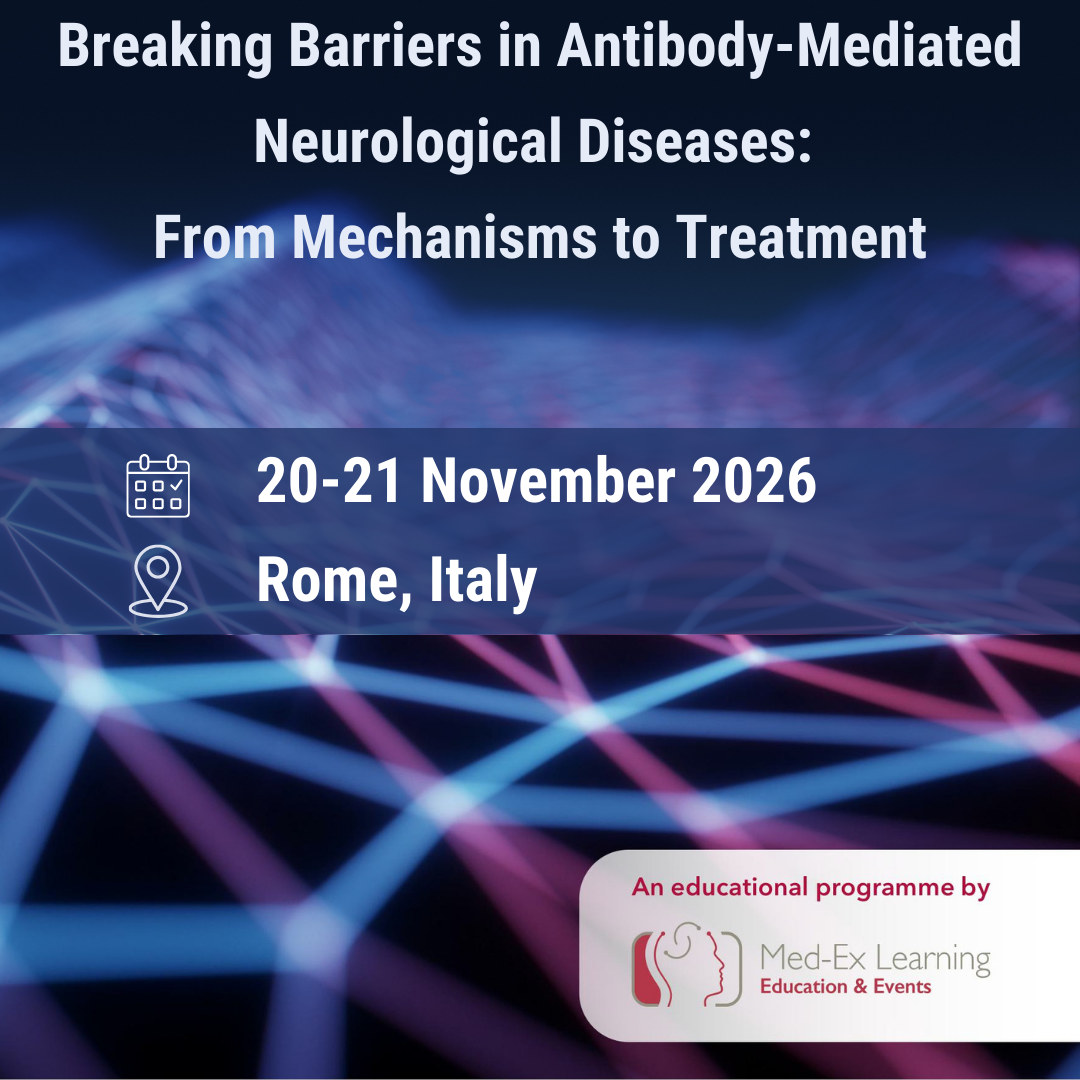
This International Workshop will provide a multidisciplinary platform to give an update on the diagnosis and treatment of antibody-mediated neurological diseases, highlighting both shared mechanisms and disease-specific features.
The landscape for the diagnosis and treatment of antibody-mediated neurological diseases is characterized by both progress and challenges. Notably, new assays for antibody testing have become available, necessitating the comparison of their relative specificity and sensitivity, and the standardization of these tests to improve diagnostic accuracy. Furthermore, several new therapeutic agents are now available, enhancing patient outcomes but also posing a challenge in selecting the most appropriate treatment.
As the treatment landscape rapidly evolves, it underscores the critical importance of continuous education to ensure healthcare professionals stay informed about the latest and most effective methods.
Learning Objectives
-
A thorough understanding of the current landscape of MG, AE, NMOSD, and MOGAD, including the latest research, unmet needs, and emerging treatment strategies.
-
Enhanced skills in addressing complex diagnostic challenges and applying advanced therapeutic approaches.
-
Expanded professional networks that pave the way for future interdisciplinary collaborations and research projects.
-
A forward-looking perspective that integrates novel biomarkers, personalized medicine, and patient-centered outcomes.
Target Audience
The workshop has been carefully designed to appeal to a wide range of professionals involved in the research and treatment of MG, AE, NMOSD, and MOGAD, including:
-
Neurologists
-
Residents in Neurology
-
Thoracic Surgeons
-
Intensivists
-
General Practitioners
-
Nurses, Pharmacists
-
Medical Researchers
-
Other Healthcare Professionals with a special interest or focus on these diseases
Scientific Organiser
Raffaele Iorio
Department of Neuroscience
Università Cattolica del Sacro Cuore
Rome, Italy
CME Accreditation
The programme will be submitted for CME accreditation to the European Accreditation Council for Continuing Medical Education (EACCME®) and the Italian Ministry of Health (MoH).
Scientific Secretariat
Med-Ex Learning
Rome, Italy
info@medexlearning.com
Pre-register Now
Pre-register now to be among the first to receive programme updates, early access to registration, and key information as the 2026 edition takes shape.